

China Can Ground the F-35 Without Mining a Single Ton
Picture a Lockheed Martin production line, not halted because China ran out of rare earths, but because the specific alloys those earths become after processing never arrived. The F-35's actuators need dysprosium-enhanced magnets. The guidance fins need terbium.
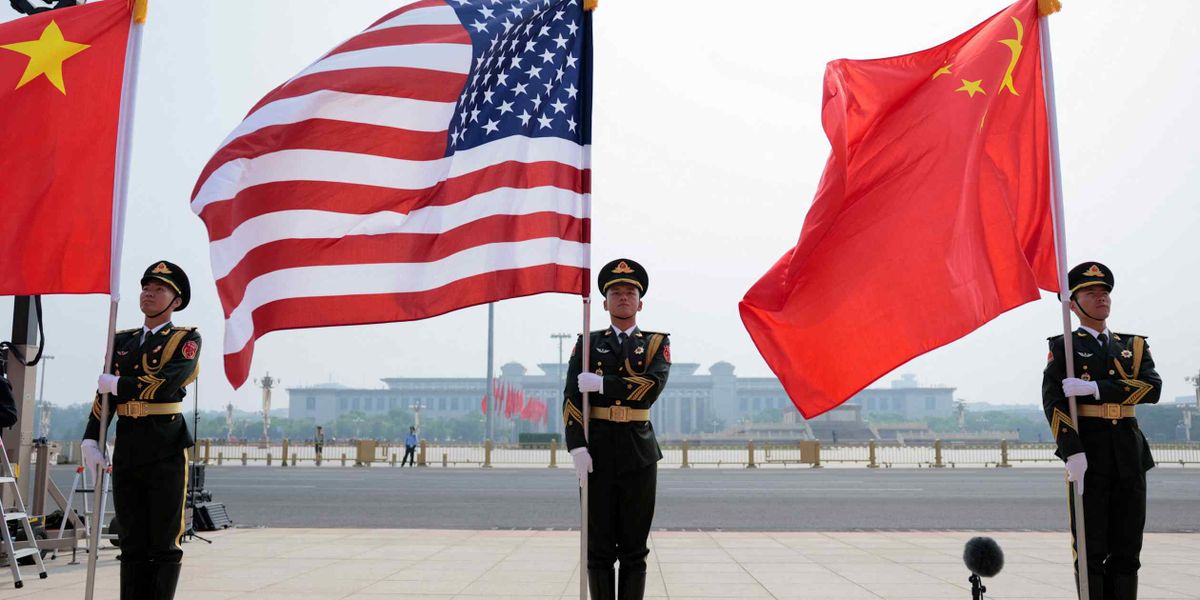
Picture a Lockheed Martin production line, not halted because China ran out of rare earths, but because the specific alloys that come out of the rare earths never showed up. The F-35's actuators need dysprosium-enhanced magnets. The guidance fins need terbium. The radar systems need neodymium. None of those elements are scarce in the ground. They're scarce in the form that actually goes into weapons systems, and that form gets made almost exclusively in China. Beijing just reminded Washington of that fact, loudly and in front of every major financial outlet, all at once.
Last week, China imposed export controls on 56 U.S. companies across rare earth, defense, and technology sectors, with a procurement ban extending to 46 of those firms. The WSJ, CNBC, and Newsweek all ran the story the same day. The simultaneous release is the tell. This was a policy action dressed up as a press release, engineered to maximize domestic political pressure on the administration before the news cycle turned. It goes like this: defense contractors brief their congressional contacts; senators from defense-manufacturing states call the White House; the administration either escalates or looks like it's folding. China has run this play before, with soybeans, with Boeing.
The historical parallel that fits isn't dramatic. It's mundane, which makes it worse. When OPEC turned off the taps in 1973, the leverage wasn't that Arab nations owned all the oil in the world. It was that the West had built its entire infrastructure around a single, optimized supply chain and had no short-term alternative. Japan pulled a smaller version of this in 2010 when it restricted rare earth exports to China during a territorial dispute, and the global electronics industry briefly panicked. The pattern is always the same: control the refinery, not the mine.
The U.S. can actually mine rare earths domestically. MP Materials runs the Mountain Pass facility in California. Lynas operates processing capacity in Australia and is building in Texas. But mining ore and turning it into the specific magnetic alloys that go into weapons systems are entirely different industrial problems, separated by 5 to 10 years of capital investment, environmental permitting, and specialized workforce development. China has had decades of both.
So when American politicians respond to this news with "we'll just mine domestically," they are describing a solution to a problem that doesn't exist. The ore is not the bottleneck. The processing capacity is. China controls roughly 60% of global rare earth mining and somewhere between 85 and 90% of the processing, per the U.S. Geological Survey's 2024 mineral commodities summary. The specific materials being restricted — dysprosium, terbium, neodymium — are not substitutable on any timeline that matters for near-term defense procurement. Beijing's threat is credible precisely because enforcement is economically painful for China too, but less painful than it is for the U.S.
That imbalance is the whole game.
The scramble that follows a supply shock like this can be the seed of a lot of tech startup work, and not all of it requires a government contract or a decade of lead time. Defense companies and large manufacturers suddenly need people who can map their second and third-tier supplier dependencies, audit rare-earth content in existing component inventories, model substitution scenarios, and communicate supply chain risk to boards and procurement officers who have spent the last twenty years being told globalization was fine, actually. Small consultancies, materials informatics startups, supply chain visibility platforms, and even independent researchers with domain knowledge in critical minerals are getting calls right now that they weren't getting in January. The Firstpost breakdown of the 10-firm export control list versus the 46-firm procurement ban is worth reading carefully if you're trying to figure out which sectors are most immediately exposed.
The U.S. spent thirty years optimizing defense and technology supply chains for cost efficiency. Outsourcing rare earth processing to China was rational, cheap, and strategically catastrophic in slow motion. The bill is arriving now, and it's denominated in lead times, not dollars. China didn't fire a shot; it filed a very public policy memo.
What happens next is genuinely unclear to me. There's no obvious off-ramp. Not a tariff negotiation with a handshake at the end, not a domestic mining bill that solves the actual problem. The processing infrastructure gap is real and it takes years to close even with unlimited political will, which the U.S. has never actually demonstrated on this issue. Maybe the controls get quietly walked back after some backroom deal. Maybe they don't, and procurement timelines for the next generation of weapons systems start slipping in ways that won't show up in headlines for another two years. I don't know. Neither does anyone who's being honest with you.



Comments ()